Drenthe is a province with a unique character: spacious plots, distinctive Saxon farmsteads, and peaceful green surroundings. More and more homeowners in Drenthe are choosing sustainable construction and retrofitting. In this article, we explore the prevailing trends and opportunities.
The Drenthe housing stock
Drenthe has a varied property stock with specific sustainability challenges:
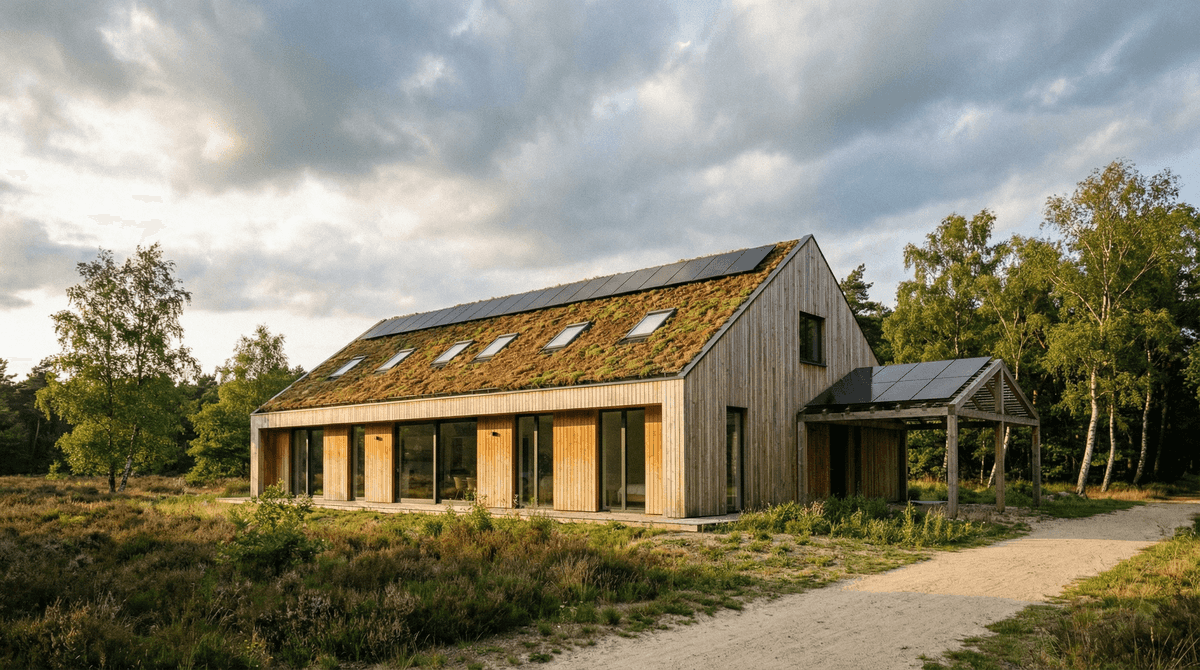
- Saxon farmhouses: large historic properties with thick brick walls, frequently lacking a cavity. Retrofitting demands tailored solutions
- Detached houses: very common throughout Drenthe, with relatively high heat loss due to large external wall surfaces
- Post-war neighborhoods: in Assen, Emmen, and Hoogeveen, many 1960s to 1980s homes require comprehensive insulation upgrades
- Historic villages: homes in picturesque villages like Norg, Westerbork, and Borger, often with limited original insulation
Trends in sustainable building
1. Phasing out natural gas
More and more households in Drenthe are switching from fossil gas to heat pumps. A hybrid heat pump represents a popular, accessible stepping stone: it pairs an electric heat pump with your existing combi boiler.
2. Integrated whole-house approach
Sustainability works best when multiple measures are coordinated. Cavity wall insulation, roof insulation, and high-efficiency HR++ glazing working in tandem can improve comfort and energy savings more than separate measures.
3. Leveraging available grants
Substantial financial support is accessible through the national ISDE subsidy and municipal schemes. In several Drenthe municipalities, supplementary arrangements exist for targeted household categories.
4. Circular building practices
Reclaimed materials and biobased alternatives are increasingly favored, such as insulation manufactured from recycled fibers and certified sustainable timber.
Frequently asked questions
Can a traditional Saxon farmhouse be made sustainable?
Yes, but it requires bespoke planning. Saxon farmhouses often have solid masonry walls without cavities. External wall insulation or breathable internal wall linings are viable options, alongside thorough insulation of the expansive roof pitch.
What is the payback period?
That depends on the measure, current building condition, energy consumption, and subsidy values. Cavity wall insulation typically recoups its cost much faster than a full heat pump, but an on-site survey provides the most dependable forecast.
Which subsidies are available in Drenthe?
The national ISDE grant applies to insulation and heat pumps. Additionally, various Drenthe municipalities offer supplementary local subsidies or low-interest sustainability loans.
Real-world project example
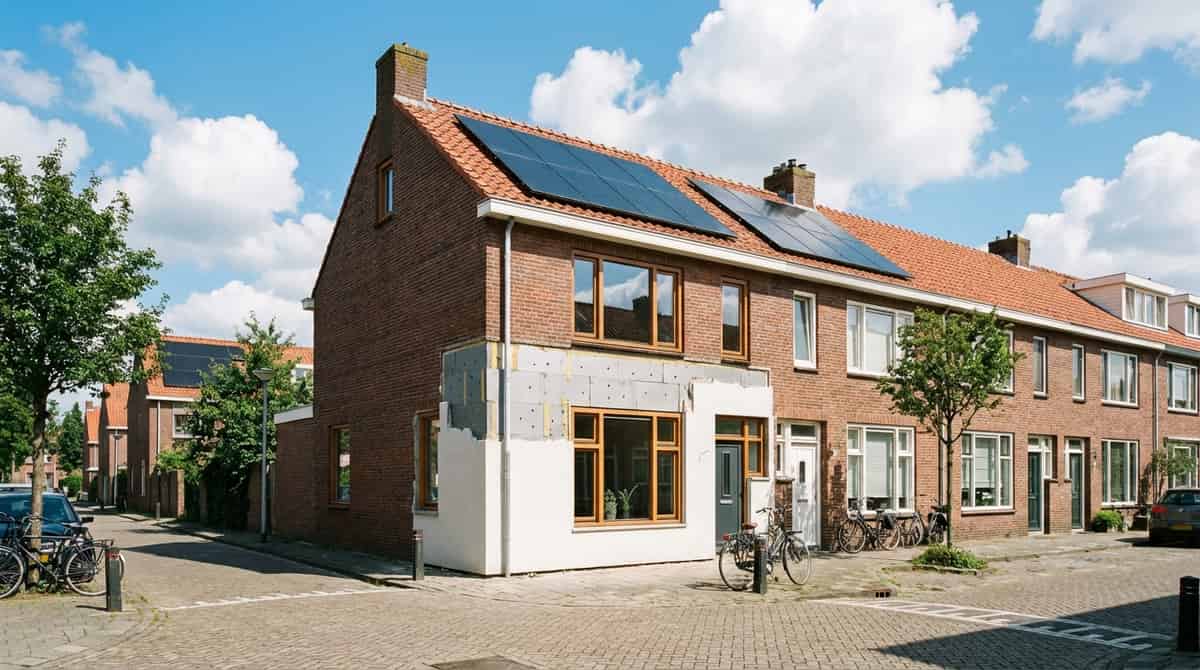
At a property on the Willem Lodewijkstraat in Leeuwarden (a home archetype comparable to many suburban Drenthe residences), we improved the energy rating from label D to label A through cavity wall insulation, roof insulation, HR++ glazing, and a hybrid heat pump.
From site survey to tailored retrofit package
Begin with the building thermal envelope: inspect the roof, external walls, ground floors, glazing, airtightness, and ventilation. Next, assess which heating system matches the calculated heat loss. Involve a certified energy consultant where necessary for formal EPC ratings and grant compliance to avoid conflicting installations.
Sustainability retrofits in Drenthe
Considering making your home in Drenthe sustainable? Heidstra Bouw advises on and executes energy retrofit projects across Drenthe, from Assen and Emmen to Hoogeveen and Meppel. Visit our sustainability page and building company Drenthe. Contact us for a free consultation: info@heidstrabouw.nl or 06-36549707.